
The church nobody visits before visiting
Before someone walks through your doors, they may already have encountered your feed. They might check your Instagram, scan your website, watch a sermon clip on YouTube, or read your Google reviews. Treat this as an editorial observation and verify your own audience behavior.
By the time they park in your lot, they've already formed an impression. They've decided whether your church feels warm or corporate, relevant or dated, welcoming or insular. That impression was shaped by content you may or may not have created intentionally.
Most churches treat social media as a bulletin board -- post the service times, share the sermon graphic, repeat. That approach is better than nothing, but it's not a strategy. A strategy connects your online presence to real-world outcomes: first-time visits, community connection, and spiritual engagement.
Choose your platforms based on your people, not trends
You don't need to be on every platform. You need to be excellent on the platforms where your target audience actually spends time. Being mediocre on five platforms is worse than being consistent and engaging on two.
Platform guidance for churches in 2026
- Instagram: The most versatile platform for churches. Works for all demographics (especially 18-45). Strong for stories, reels, community building, and event promotion. If you only pick one platform, pick this one
- YouTube: Essential if you produce sermon content. Long-form video performs well in search (people search YouTube for sermon topics). Also great for worship sets and testimony videos. It's a search engine as much as a social platform
- Facebook: Still the primary platform for adults 40+. Best for event promotion, community groups, and reaching parents. Your Facebook Group may be more valuable than your Facebook Page
- TikTok: Growing fast among churches reaching younger demographics. Short-form, authentic content performs best. Not for polished sermon clips -- for real moments, humor, and behind-the-scenes content. If your target audience includes anyone under 30, this matters
Content that connects vs. content that broadcasts
There's a fundamental difference between content that broadcasts information and content that creates connection. 'Service this Sunday at 9 and 11 AM' is broadcasting. 'Meet Maria -- she started attending six months ago and here's what changed' is connection. Both have a place. But most church social accounts are 90% broadcast and 10% connection. Flip that ratio.
Content types that perform well for churches
- Sermon clips (30-90 seconds): Pull the most quotable, emotionally resonant moment from the sermon. Not the introduction -- the climax. Add captions (80% of social video is watched without sound)
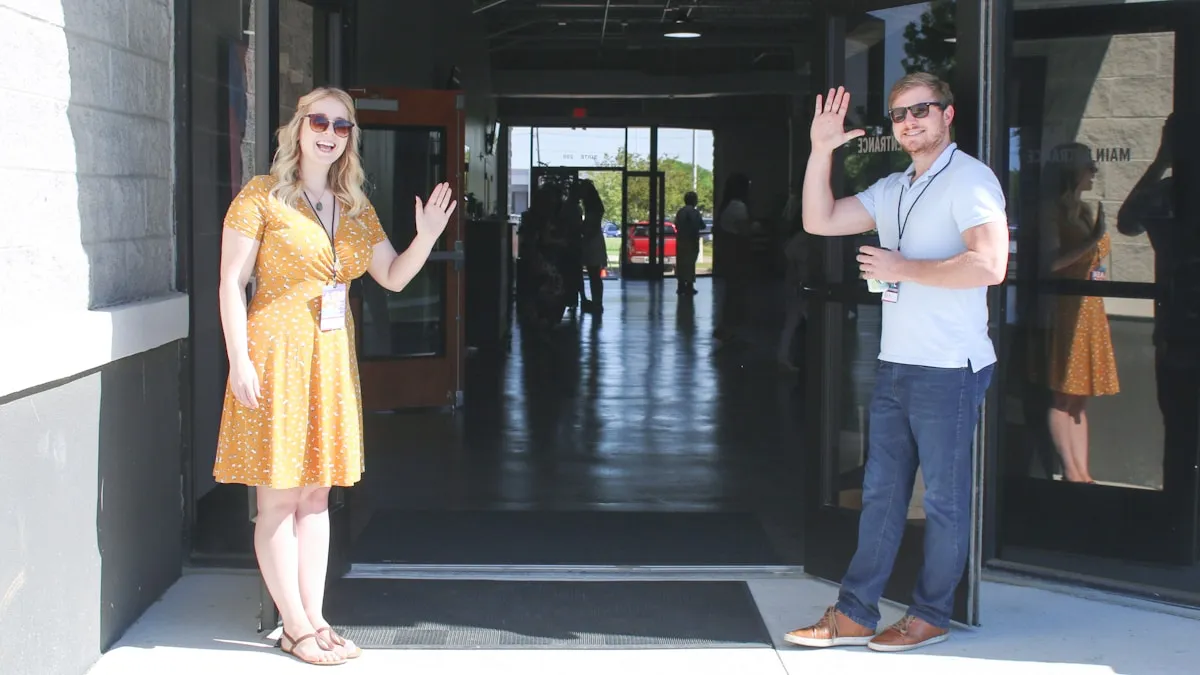
- Behind-the-scenes content: Setup for Sunday morning. The worship team rehearsing. The youth group being goofy. The pastor's study with coffee and an open Bible. This humanizes your church and makes people feel like insiders before they arrive
- Member stories and testimonies: With permission, share real stories of transformation. These are the most shareable content any church produces. Keep them brief (60-90 seconds for video, 3-4 sentences for a caption)
- Interactive content: Polls, questions, 'this or that' stories. Ask your community to participate, not just observe. 'What's one thing you're praying for this week?' generates more engagement than 'Here's our prayer list'
- Event previews with personality: Don't just post a flyer. Show someone setting up for the event. Interview the organizer about why they're excited. Create anticipation, not just information
A good benchmark: if your content looks like it could come from any church in America, it's not specific enough. Your social media should feel like your church -- the humor, the warmth, the quirks, the real people.
From likes to visits: connecting online engagement to in-person community
Social media engagement that stays online is just entertainment. The goal is to move people from a follow to a visit, from a comment to a conversation, from a viewer to a participant. This requires intentional bridges between your digital presence and your physical community.
Building the bridge
- Clear, consistent invitations: Every week, at least one post should include a simple, specific invitation. Not 'Join us Sunday!' -- 'This Sunday we're starting a new series on anxiety and faith. If that's something you're wrestling with, we'd love to have you. 9 and 11 AM, childcare provided'
- First-time visitor mentions: When someone comments 'I'm thinking about visiting,' respond personally and immediately. Assign someone to monitor comments and DMs -- this is your digital welcome team
- Event-specific landing pages: Don't link to your homepage. Link to a page about the specific event or series you're promoting, with a clear next step (register, RSVP, get directions)
- Follow-up after the visit: If someone interacts online and then visits, connect the dots. A text that says 'So glad you came after connecting with us online!' shows you're paying attention as a community, not just a content machine
Planning and consistency: the unsexy secret
The churches with the best social media presence aren't the ones with the biggest budgets or the most talented content creators. They're the ones that post consistently. Three times a week, every week, for a year beats a viral moment followed by three months of silence.
A simple content planning system
- Plan content in 6-week blocks aligned with your sermon series and church calendar. This gives you a content backbone without requiring daily creativity
- Batch-create content. Spend 2-3 hours once a week filming, editing, and writing captions for the entire week. Don't try to create content in real-time every day
- Use themed content days for consistency: 'Testimony Tuesday,' 'Worship Wednesday,' 'Friday Funny.' Themes reduce decision fatigue and create audience expectations
- Repurpose ruthlessly. One 30-minute sermon produces a full sermon video (YouTube), 3-4 clips (Instagram/TikTok), a quote graphic, a discussion question, and a blog post outline. One source, five pieces of content
Assign ownership. Social media that's 'everyone's responsibility' is nobody's responsibility. Designate one person (staff or skilled volunteer) as the social media lead. Give them authority to post, respond, and make content decisions without committee approval for every post.
Your next move
You don't need a content studio or a social media degree. Start with one change this week:
- Audit your current accounts. Look at your last 10 posts. How many are broadcast (service times, event flyers) vs. connection (stories, behind-the-scenes, questions)? Adjust the ratio toward connection
- Film one 60-second sermon clip this Sunday. Caption it, post it on Instagram and YouTube Shorts, and see how it performs compared to your usual posts
- Add 'How did you hear about us?' to your connection card with specific social media platform options. Start tracking which channels actually produce visits
Your social media is the first impression most visitors will have of your church. Make sure it feels like walking into your building -- warm, genuine, and worth coming back to.