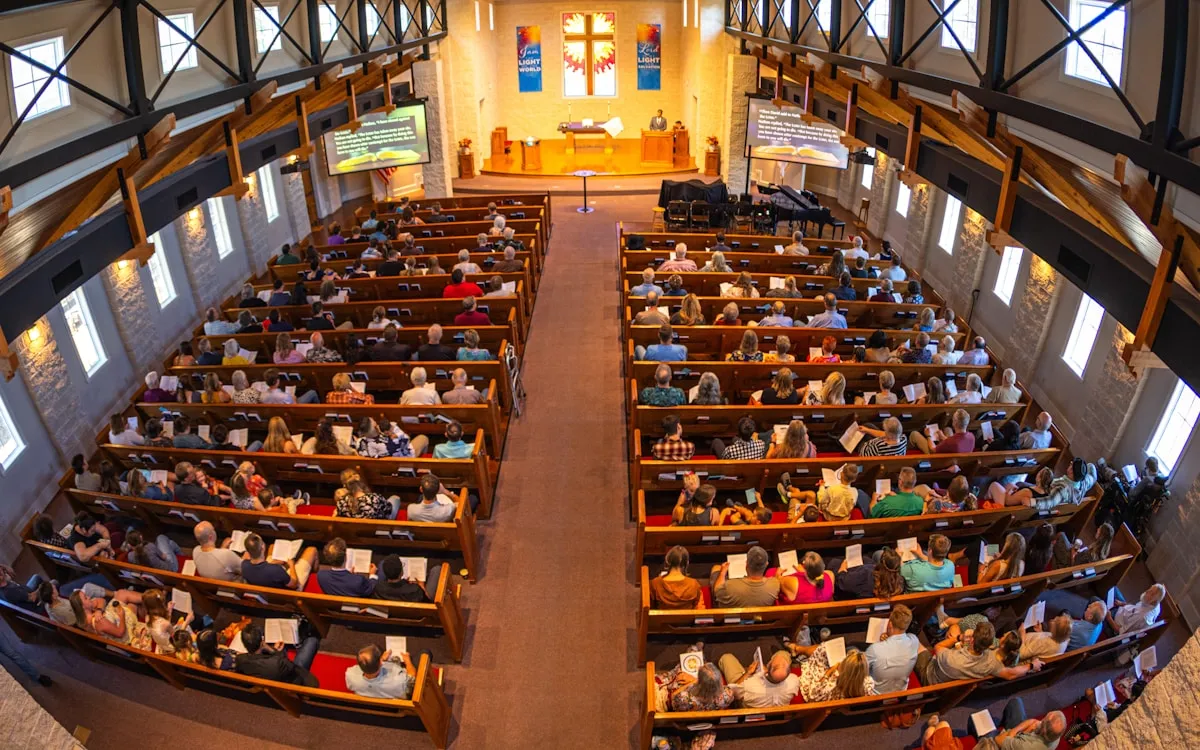

The conversation that's already happening
Imagine a composite small-group conversation about contentment in which someone says they are struggling with anxiety and is unsure whether it is safe to share. The scenario is illustrative; do not present it as a named testimony or a report from a particular church.
A similar moment can arise in any congregation. The practical question is whether the church has created a space where people can ask for help and a pathway to connect them with appropriately trained support.
Mental health is a pastoral reality to address. Build the ministry around clear boundaries, referral relationships, and care for both congregants and leaders rather than relying on an unsupported benchmark.
Why churches are uniquely positioned (and uniquely challenged)
Churches have something most mental health organizations don't: existing community. People already come to your building every week. They're already in small groups. They already trust their pastor. The relational infrastructure is there. What's often missing is the training, the language, and the referral network to use that infrastructure for mental health support.
The unique challenges
- Stigma: In some church cultures, mental health struggles are treated as spiritual failures -- 'just pray more' or 'you need more faith.' This pushes people into silence, not healing
- Scope confusion: Pastors are not therapists. Small group leaders are not counselors. When churches blur these lines, people get inadequate care and leaders burn out trying to handle situations they're not trained for
- Liability concerns: Churches worry about legal exposure when providing any form of mental health support. This fear often leads to inaction, which is worse than imperfect action with appropriate boundaries
- Resource limitations: Smaller churches can't hire a licensed counselor on staff. But they can build partnerships with local professionals who share their values
The goal isn't to turn your church into a clinic. It's to create a culture where asking for help is as normal as asking for prayer -- and to have a clear pathway for when someone does.
Building the infrastructure: three layers of support
A church mental health ministry works best as a layered system. Not every situation needs a professional counselor. Not every situation can be handled by a small group leader. The key is matching the right level of support to each person's need.
Layer 1: Awareness and destigmatization (everyone)
- Preach and teach about mental health regularly -- not just in a special series, but integrated into the normal rhythm of sermons and studies
- Share stories of leaders and members who have sought help (with permission). Vulnerability from the front normalizes the conversation for everyone else
- Use language that integrates faith and mental health: 'We believe God works through counselors, medication, and community -- not just prayer alone'
- Provide mental health resources in your lobby, on your website, and in your small group leader training materials
Layer 2: Equipped responders (trained leaders)
- Train pastoral staff in Mental Health First Aid (MHFA) -- an 8-hour certification course that teaches how to recognize signs of mental health challenges and respond appropriately
- Train small group leaders to listen, validate, and refer -- not to diagnose or counsel. They need to know what to say ('Thank you for sharing that. Can I help connect you with someone who can support you?') and what not to say ('Have you tried just trusting God more?')
- Create a care team specifically for mental health follow-up. These aren't therapists -- they're trained lay leaders who check in, pray, and ensure people don't fall through the cracks between Sunday and their next counseling appointment
Layer 3: Professional referral network (licensed counselors)
- Build a vetted list of 3-5 local licensed counselors or therapists your church trusts. Include counselors who offer sliding scale fees or accept insurance, so cost isn't a barrier
- Consider partnering with a counseling ministry that offers reduced-rate sessions specifically for church members
- For larger churches: explore having a licensed counselor available on-site one day per week. This reduces the barrier between 'I need help' and 'I'm getting help' from weeks to days
- Keep the referral process simple. A warm handoff ('I'd like to introduce you to Dr. Martinez -- she's helped several people from our church') is dramatically more effective than handing someone a phone number
Destigmatizing from the pulpit: what to say and how to say it
Culture change starts from the front of the room. A pastor who acknowledges their own therapy, who preaches that Elijah experienced depression and David wrote psalms of despair, who normalizes medication alongside prayer -- that pastor gives permission to an entire congregation to be honest.
Practical approaches
- Integrate, don't isolate. Don't make mental health a special sermon series (and then never mention it again). Weave it into normal teaching. When preaching on anxiety in Philippians 4, acknowledge that 'anxiety' for some is a clinical condition that requires professional support, not just a mindset to overcome
- Share your own journey. If appropriate, share your own experiences with counseling, stress, or mental health. Vulnerability from leaders is the single most effective destigmatizer. You don't have to share everything -- just enough to signal that it's safe
- Name the harmful narratives. Directly address the 'just pray harder' theology that keeps people in silence. Say out loud: 'Seeking professional help is not a failure of faith. It's wisdom. We see a doctor for a broken arm. There's no shame in seeing a therapist for a broken heart'
- Celebrate professional help. When someone shares a testimony about counseling or recovery (with their permission), give it the same weight you'd give a testimony about any other healing. This communicates that mental health healing is real, valid, and worthy of celebration
Supporting the supporters: preventing care team burnout
The people who care for others are the most vulnerable to burning out themselves. Pastors, care team members, and small group leaders who absorb congregational pain without their own support systems will eventually break. Building a mental health ministry without caring for the caregivers is building on sand.
Protecting your care team:
- Supervision and debriefing: Monthly meetings where care team members can process difficult conversations with a trained facilitator. This is not a business meeting -- it's emotional processing
- Clear boundaries: Define what care team members are expected to do and what is beyond their scope. When in doubt, refer. Better to over-refer than to have a lay leader attempting crisis intervention they're not trained for
- Personal counseling access: Provide or subsidize counseling for your pastoral staff and care team members. If you expect them to care for others, invest in their own wellbeing
- Rotation and rest: Care team service should have terms (6-12 months) with scheduled breaks. Compassion fatigue is real and predictable. Build rest into the system, not as an emergency response
Using your systems to support care
Mental health ministry generates sensitive information that needs to be tracked carefully. Care requests, counseling referrals, follow-up schedules, and confidential pastoral notes all need a home -- one that's secure, accessible to the right people, and impossible to lose in a text thread.
- Care request tracking: When someone raises a concern in a small group, at the altar, or through a form, log it in your ChMS with appropriate confidentiality settings. This ensures follow-up actually happens
- Referral management: Track which counselors are recommended, whether the person scheduled an appointment, and whether follow-up occurred. The gap between referral and appointment is where people are lost
- Confidential notes: Use role-based access so pastoral care notes are visible only to authorized staff. A volunteer checking someone in on Sunday morning should not see their counseling history
- Follow-up automation: Set reminders for care team members to check in at 1 week, 1 month, and 3 months after a care request. Consistent follow-up communicates that the church cares beyond the initial conversation
Your next move
You don't need a full mental health program to start. You need one step that signals to your congregation that this matters:
- Build your referral list. Identify 3-5 licensed counselors in your area who are open to church partnerships. Meet with them. Understand their specialties, availability, and fee structures. Share this list with your pastoral team and small group leaders
- Train your small group leaders. A 2-hour workshop on recognizing signs of distress, responding with empathy, and making referrals. This doesn't require a seminary degree -- it requires intentionality and a good training resource
- Say something from the pulpit. This Sunday, in the middle of whatever you're preaching, include one sentence that normalizes mental health care. 'If you're struggling and you need someone to talk to -- a professional, not just a friend -- we can help connect you.' That one sentence changes the culture
The church has always been in the business of healing. Mental health ministry isn't a new initiative -- it's an extension of what you've always been called to do. The difference is building the systems and partnerships that make it sustainable.