
Two churches, same mission, different Monday mornings
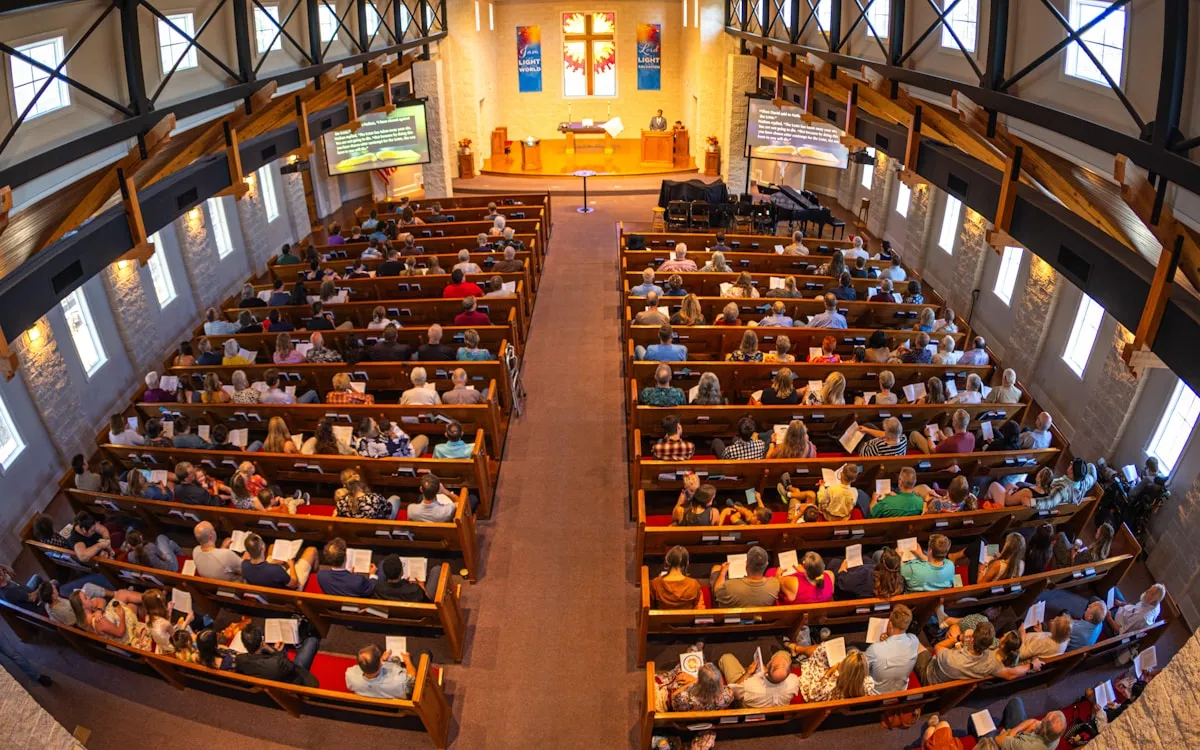
Consider two composite churches with the same mission but different Monday mornings. In the smaller setting, a pastor may notice absences and care needs through direct relationships. In the larger setting, a care team may rely on pastoral notes, staff meetings, and alerts to share context.
This is an illustrative contrast, not a report about named pastors or specific congregations. Both settings can preserve personal care; the question is how much context must be shared through a system.
Neither approach is inherently wrong. The practical mistake is carrying a small-team process into a larger setting without adapting it, or adopting systems so corporate that they lose the personal touch that made the church special.
Pastoral care: from instinct to system
At 200 people, pastoral care runs on relationships. The lead pastor knows who's going through a divorce, who just lost a parent, who's been absent. The care is intuitive, personal, and deeply effective. But it doesn't scale.
At 2,000 people, the lead pastor can't hold all that context in their head. That's not a failure -- it's math. The solution is distributing care across a team while preserving the personal quality that makes it meaningful.
What changes
- A single pastor doing all care visits becomes a care team with defined areas of responsibility
- Mental notes about who needs a call become documented pastoral notes that transfer between team members
- Noticing when someone is absent becomes a system that flags attendance drops automatically
- Informal check-ins after service become scheduled care rhythms with accountability
What stays the same
The care itself should still feel personal. A family in crisis should still get a visit from someone who knows their name and their story. The difference is how that person got the context -- from their own memory at 200, from shared notes at 2,000. The quality of the care shouldn't change. Only the delivery system does.
Communication: from one voice to many channels
At 200 people, the lead pastor can announce something from stage and most of the church will hear it. A single email covers the whole congregation. Communication is straightforward because the audience is homogeneous enough to address as one group.
In a larger, multi-service church, a single announcement may not reach everyone on a given Sunday. People may be at another service, another campus, or watching online, and different groups will have different communication needs. Treat this as an illustrative planning problem rather than a benchmark.
Communication shifts at scale:
- One weekly email becomes segmented messaging by campus, age group, and ministry involvement
- Stage announcements become one channel among many, not the primary information source
- The lead pastor's voice becomes one of several -- campus pastors, ministry leaders, and group leaders all communicate within their sphere
- Frequency management becomes critical -- you can't send five messages a week to everyone without causing unsubscribes
The trap is either over-communicating (flooding everyone with everything) or under-communicating (assuming the Sunday morning announcement is enough). The middle ground is segmentation: the right message to the right people at the right time. As an illustrative planning exercise, segmenting messages lets a team test which audiences need which information and avoid sending every message to everyone.
Volunteers: from recruiting to pipeline building
At 200 people, you know who might say yes. The pastor walks up to someone after service, asks them to help with kids ministry, and they start next Sunday. Volunteer recruiting is relational and direct.
At 2,000 people, you need 300-400 volunteers to run a Sunday. You can't personally recruit each one. You need a pipeline: awareness, interest, application, training, placement, and ongoing care. It's not less relational -- it's relational at scale, which requires structure.
The volunteer infrastructure shift
- Personal asks become organized recruitment campaigns with clear role descriptions
- 'Jump in this Sunday' becomes a structured onboarding pathway with background checks and training
- One volunteer coordinator becomes team leaders who manage their own rosters
- Informal appreciation becomes systematic recognition -- because nobody can personally thank 400 people
The churches that scale volunteer teams well do something counterintuitive: they invest more in leader development than in volunteer recruitment. When you develop strong team leaders, those leaders recruit and retain their own teams. The growth becomes organic instead of centrally managed.
Data: from optional to essential
At 200 people, data is a nice-to-have. The pastor can sense trends. Attendance feels lighter in summer. Giving dips in January. The youth group seems smaller lately. Those instincts are usually accurate because the scale is manageable.
At 2,000 people, instincts aren't reliable anymore. You can't feel whether attendance dropped 8% last month because the building still looks full. You can't sense giving trends when hundreds of transactions flow through every week. Without data, you're making decisions blind.
The shift isn't from no data to lots of data. It's from informal observation to structured review. A weekly 15-minute data check in staff meeting replaces the 'gut feeling' approach. When something changes, you catch it in weeks instead of months.
Data also enables honest conversations about resource allocation. At 200 people, the budget discussion is relatively simple because everyone can see where the needs are. At 2,000, competing ministries make valid arguments for funding, and without data to inform those decisions, the loudest voice wins. Attendance trends, engagement metrics, and growth rates provide an objective foundation for stewardship conversations.
The real question isn't about size
Every growing church faces a version of the same tension: how do we add structure without losing soul? The answer is that structure and soul aren't opposites. Good structure serves the soul of the church. It frees pastors from administrative burden so they can focus on relationships. It prevents people from falling through the cracks. It makes care consistent instead of dependent on one person's memory.
The churches that scale well don't add every system at once. They add the right system at the right time. When attendance tracking breaks because the pastor can't remember everyone, that's the moment for a check-in system. When volunteer burnout spikes because nobody is tracking service frequency, that's the moment for rotation scheduling. Let the pain point drive the investment.
If your church is growing and things feel chaotic, that's normal. Chaos is the gap between your current systems and your current reality. Closing that gap doesn't require becoming corporate. It requires being honest about what's changed and building systems that match.


![7-point church management software evaluation checklist [2026]](/images/blog/evaluate-church-management-software-checklist.webp)